 Deep diver
Sperm whale
Largest toothed whale
- Male length
- About 16 m
- Dive
- Up to 45 min
- Look for
- Angled blow
Guides
Language
EnglishCurrency
US dollar · $GetYourGuide converts to the currency you select here.
Guide · Wildlife
The killer whales draw the crowds, but the same deep water holds sperm whales, pilot whales, dolphins, sharks and ocean birds. Here is who lives out there and how to tell them apart.
Editorial team, bremer-bay-orcas.comUpdated October 24, 2026Read time: 6 min40 sources
What you might meet
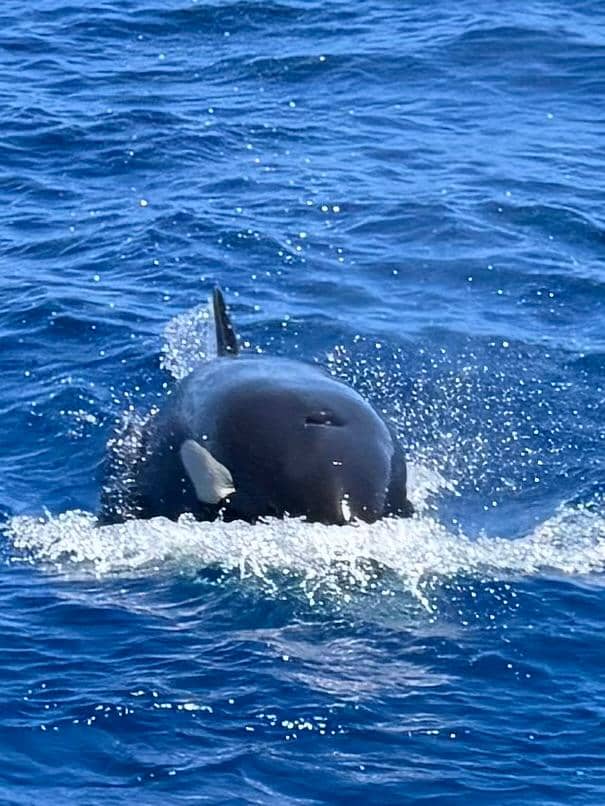
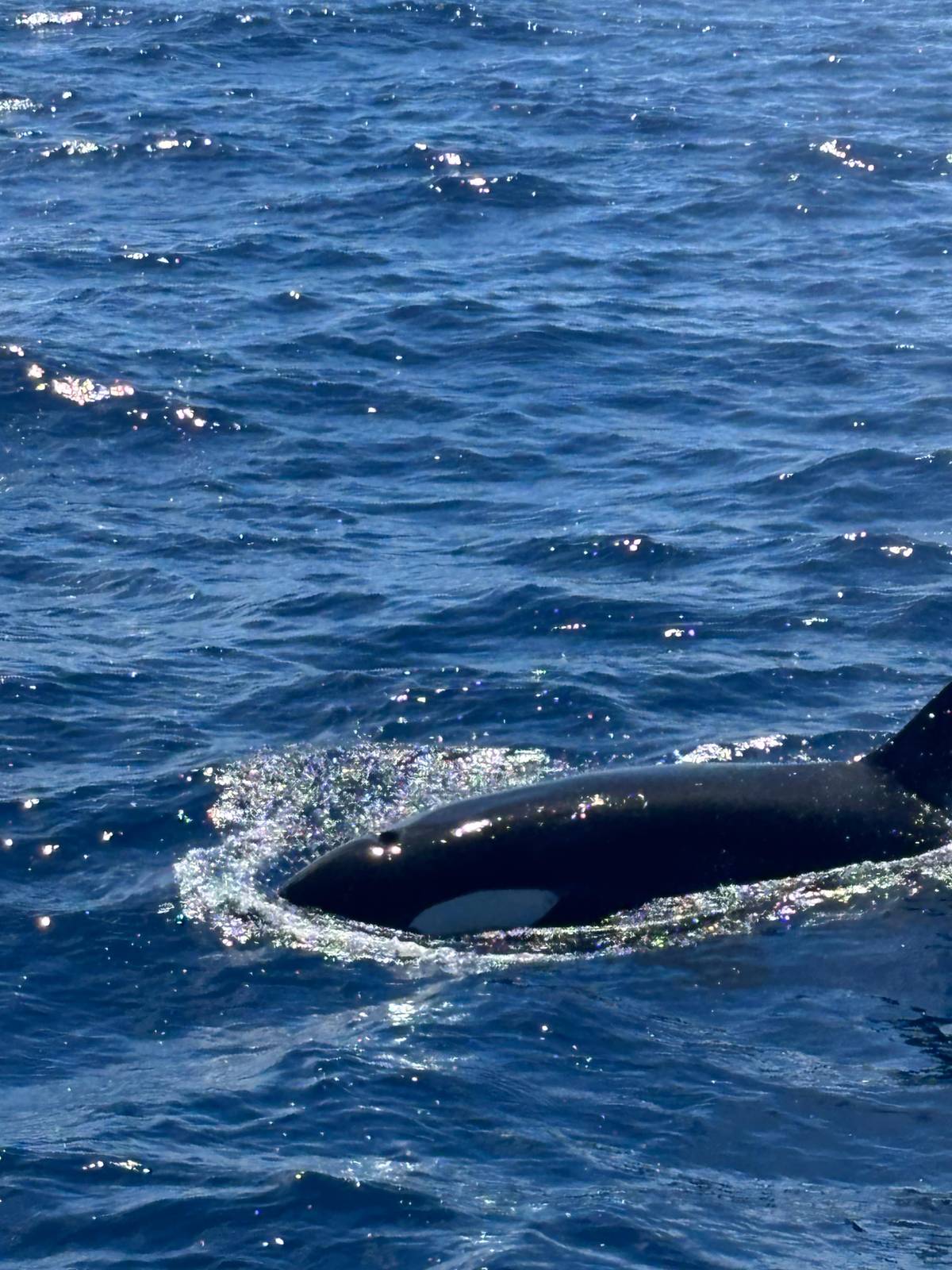
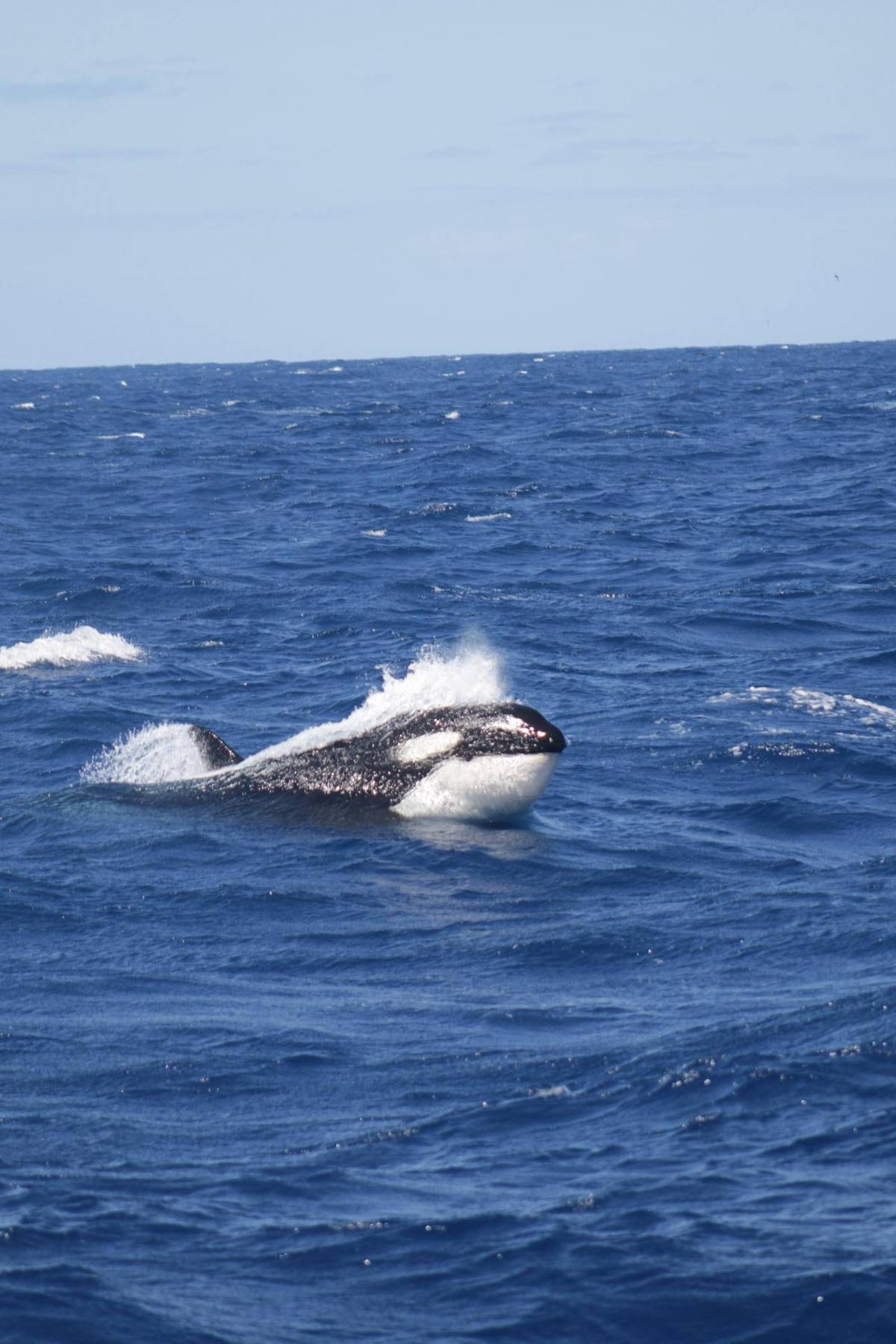
The booked expedition names a whole cast for the day: orcas, sperm whales, pilot whales, dolphins, sharks and pelagic birds. That list matches what scientists found when they surveyed the area. A team from Edith Cowan University combined aerial surveys with ship-based surveys from 2015 to 2017 to map where whales occur in the Bremer Sub-Basin.4
Their count shows how busy the water is. The surveys met 177 killer whale groups, 69 sperm whale groups and 29 long-finned pilot whale groups, plus 2 groups of false killer whales, 1 of strap-toothed beaked whales, 12 of bottlenose dolphins and 5 of common dolphins.1 Those are groups, not single animals, and they were found over three years of searching.
Nobody can tell you which of these animals you will meet on a given day. Whale watching at the Bremer Canyon is a search in open ocean, and some days bring one species close up while others bring many at a distance. Treat every extra species as a bonus on top of the orcas you came for.
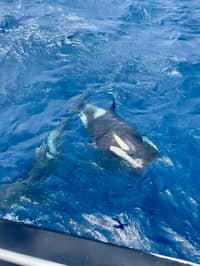
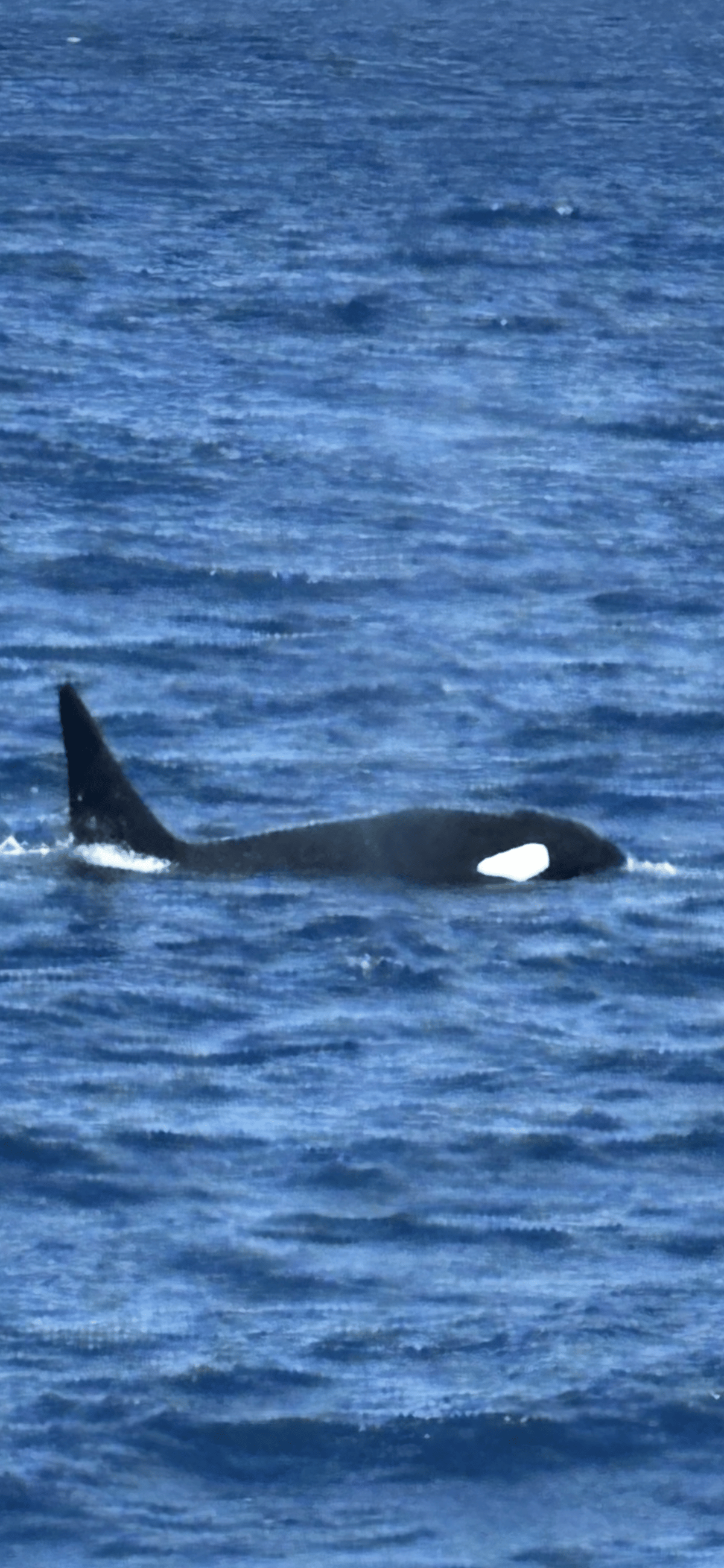
Sperm whales are the largest of the toothed whales.5 Australia's species database says adult females may reach 11 m and 15 tonnes, while adult males reach about 16 m and as much as 45 tonnes.6 They are most common in submarine canyons at the edges of the continental shelf, which makes the Bremer area a natural place to find them.7
Their lives happen mostly out of sight. The US National Marine Fisheries Service says they hunt in deep dives that routinely reach 2,000 feet and can last 45 minutes.8 Their diet is deep-water squid, sharks, skates and fish.9 When one surfaces, look for a low, angled blow and a long, wrinkled back that rests at the surface before the next dive.
The south coast is known sperm whale country. The federal species profile lists the stretch between Cape Leeuwin and Esperance, close to the edge of the continental shelf, among the key localities in Australia.10 It also notes that sperm whales have concentrated in a narrow area only a few miles wide at the shelf edge off Albany.11
Field guide
| Animal | Size | Dives | Food |
|---|---|---|---|
| Killer whale | Up to 32 feet | 20 to 60 m, up to 300 m | Whales, seals, fish |
| Sperm whale, male | About 16 m | 2,000 feet, 45 min | Squid, sharks, fish |
| Pilot whale | 19 to 25 feet | 2,000 feet, 10 to 16 min | Squid, fish, octopus |
| Blue whale | Up to 110 feet | Not given | Krill |
Sizes and dives from the US National Marine Fisheries Service and Australia's species database.1268131415161718
Spotting guide
Deep diverLargest toothed whale
 Social pods
 Bird spotter
Ocean wanderer
Decision helper
Your best focus on deck
They are most common in canyons at the shelf edge.7
177 killer whale groups were met in the surveys.1
Albatrosses and shearwaters were recorded at a hunt.2
The area draws fish and sharks as well as whales.3
The trip includes full interpretation on board.
It is considered a biologically important area that attracts a myriad of species including fish, sharks, and deep-diving whales such as sperm whales
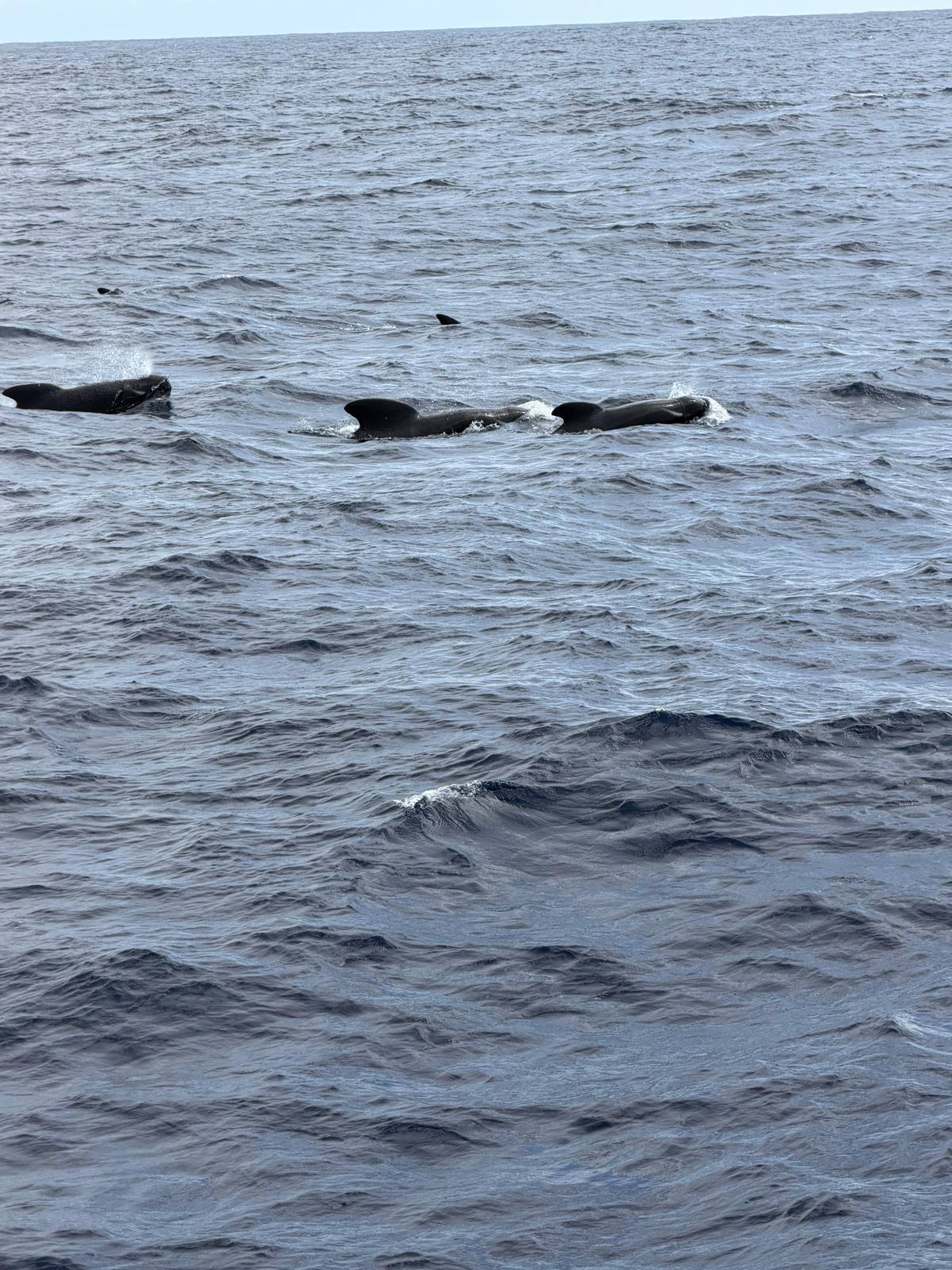
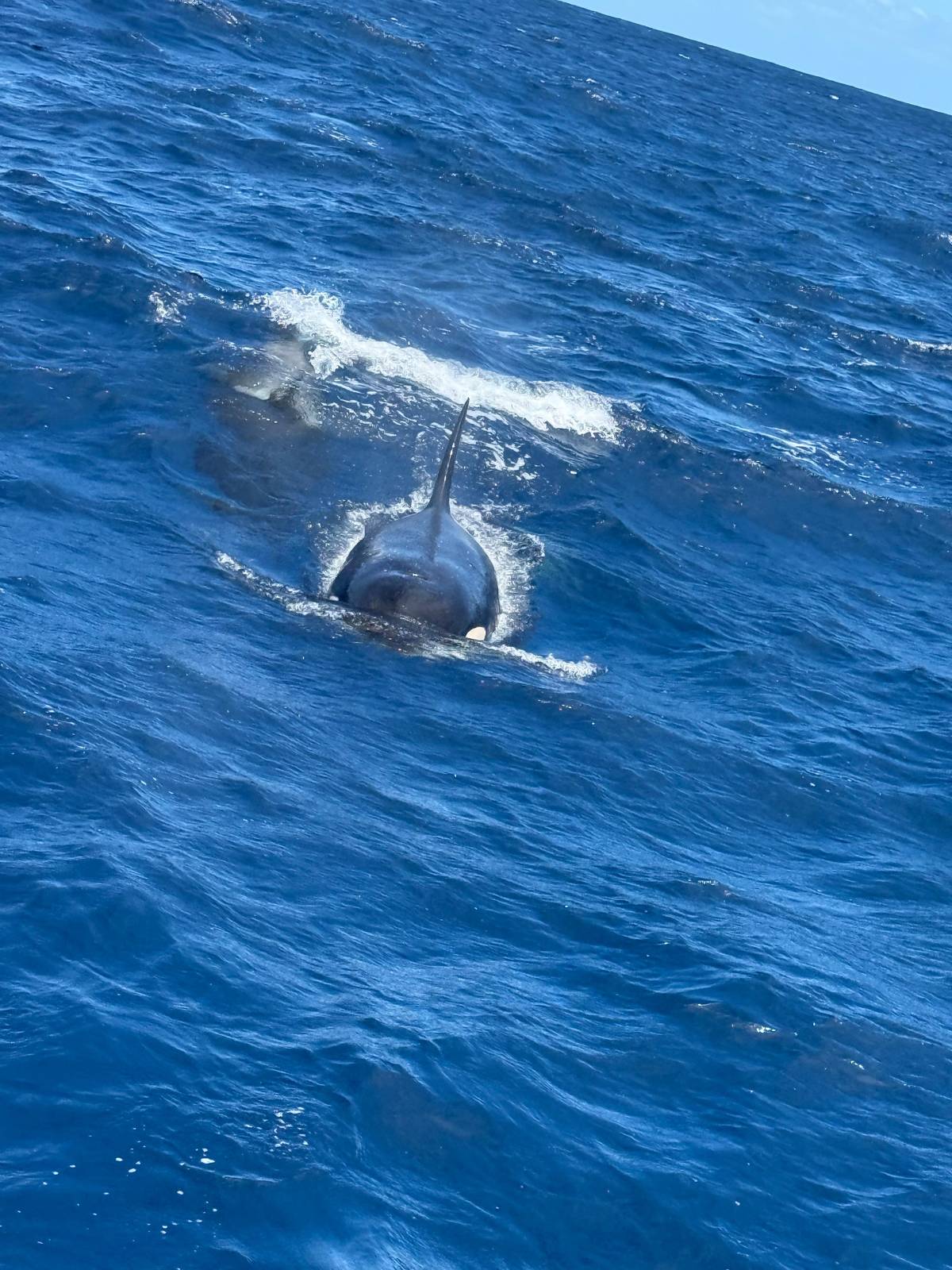
Long-finned pilot whales travel in tight, sociable groups. Australia's species database says they appear to live in relatively stable pods, much like killer whales.19 The US National Marine Fisheries Service gives them a length of 19 to 25 feet and a weight of 2,900 to 5,000 pounds.13 Their rounded heads and dark bodies make a pod look like a row of black buoys rolling at the surface.
They dive deep too, to about 2,000 feet for 10 to 16 minutes, feeding on fish, squid and octopus.14 Off Australia, squid are their main prey.20 On the IUCN Red List they are listed as Least Concern.21
Dolphins round out the picture. The surveys met bottlenose and common dolphin groups, and the booked listing names dolphins among the animals of the day.1 A pod riding the bow wave on the way out is one of the easiest sightings of the trip, and a good warm-up for spotting fins.
Map
The town and the Bremer Marine Park offshore, the coast from Albany to Esperance, and the long drive down from Perth.
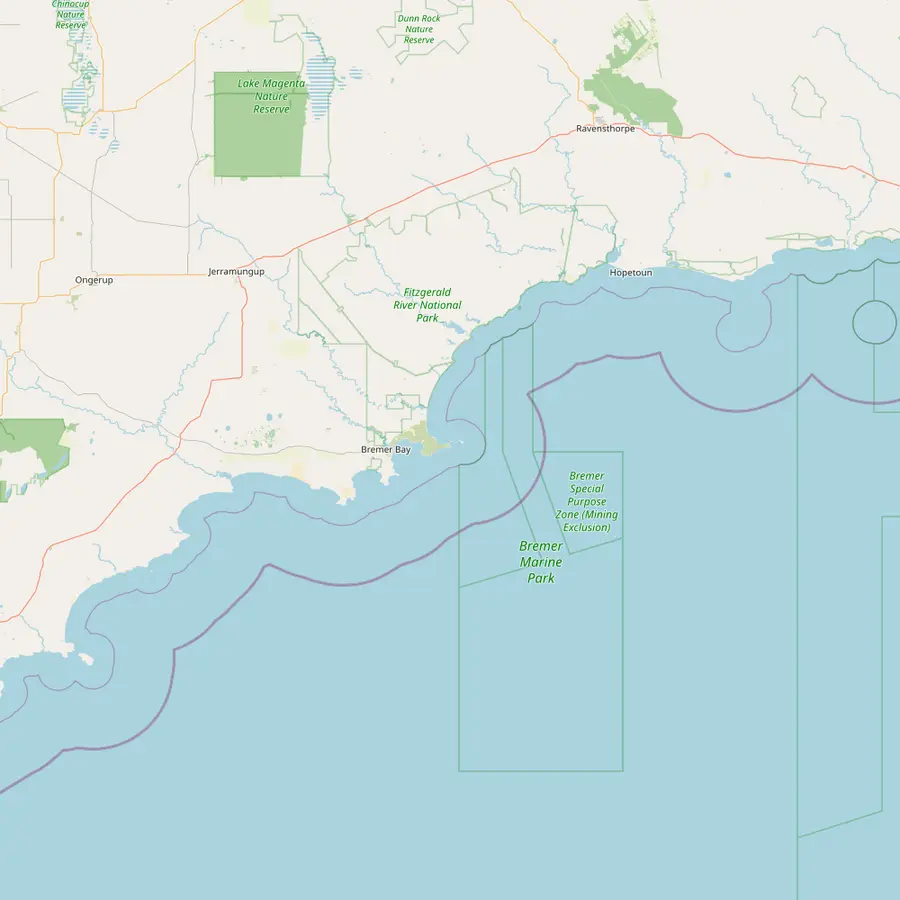 1Bremer Bay2Bremer Marine Park3Fitzgerald River National Park
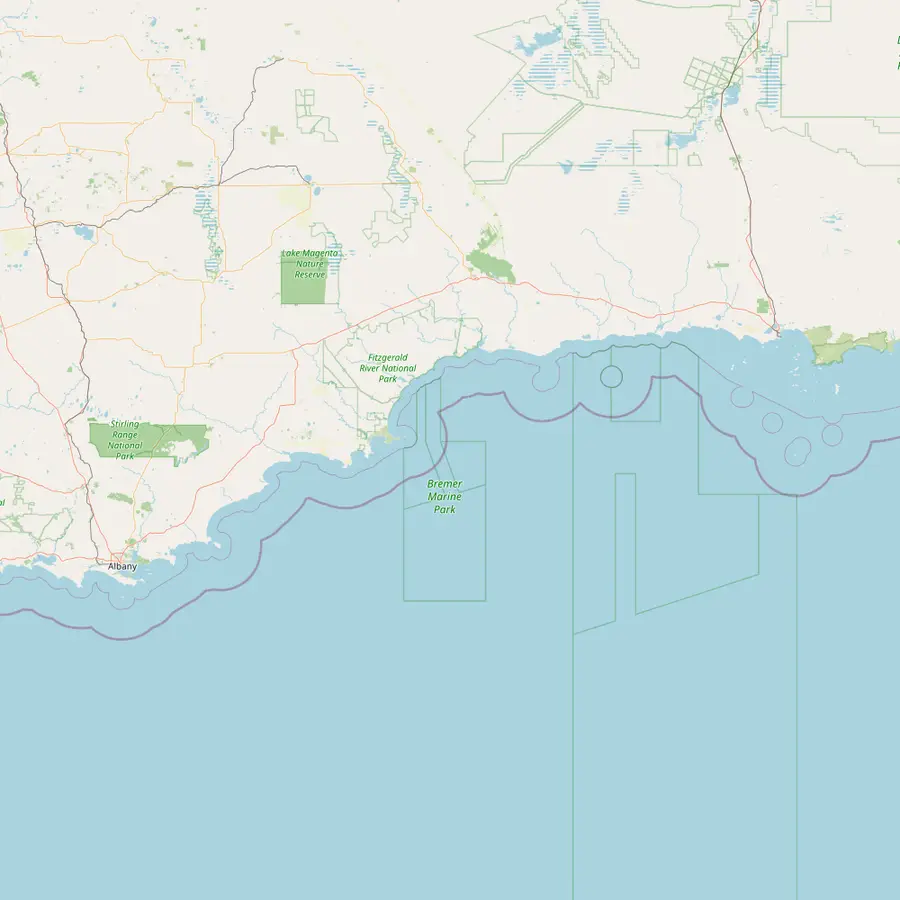 4Albany1Bremer Bay5Jerramungup6Hopetoun7Esperance
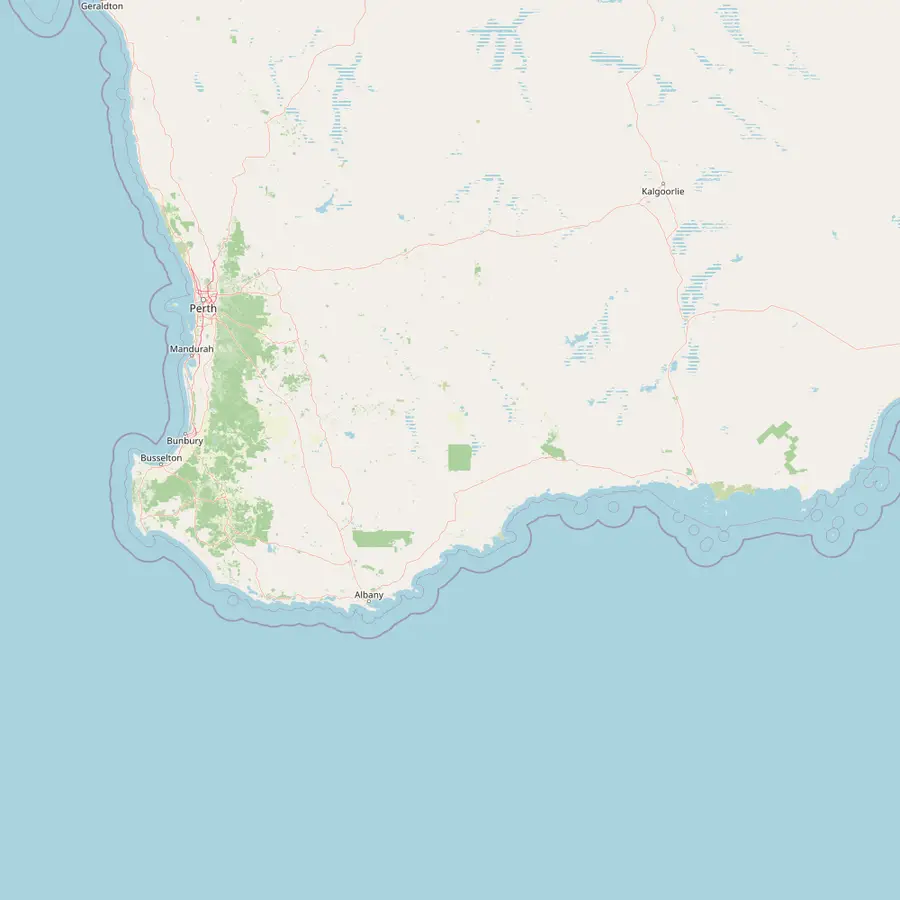 8Perth4Albany1Bremer Bay7Esperance
A town of 424 people at the mouth of the Bremer River.2223
In Google Maps ↗Holds the Bremer Canyon, which Tourism WA puts 70 km offshore from the town.2425
In Google Maps ↗Home to 75 plant species found nowhere else, with whale platforms at Point Ann.2627
In Google Maps ↗Just under two hours by car west of Bremer Bay.28
In Google Maps ↗A stop at Lions Park on the Transwa coach line between East Perth and Esperance.29
In Google Maps ↗The Fitzgerald Biosphere Reserve stretches between here and Bremer Bay.30
In Google Maps ↗Rex runs daily flights between Esperance and Perth.31
In Google Maps ↗5.5 to 6.5 hours by road from Bremer Bay, depending on the Tourism WA page.2823
In Google Maps ↗Checklist
Video
Nothing loads from YouTube until you press play.
Beaked whales are among the least known whales on earth, and the Bremer area produced some of the first field records of orcas hunting them. A study in PLOS ONE described killer whales attacking beaked whales on four occasions in 2014, 2015 and 2016.32 In 2016 the prey was identified as a strap-toothed whale.33 Gray's beaked whale is the beaked whale most commonly recorded in Western Australian waters.34
Blue whales pass through as well. Researchers recorded the first known killing of an adult blue whale by killer whales in late March 2019 off this coast.35 The US National Marine Fisheries Service calls the blue whale the largest animal ever to live on the planet.18
Seeing a beaked whale or a blue whale is rare on any trip, and nobody should book expecting one. They are part of why the canyon fascinates scientists, and part of why the orcas are there at all: a deep, productive sea feeds a long chain of animals, and the killer whales sit at its top. If the boat does find one, the crew will know it is a special day, and so will you.
Sharks at the Bremer Canyon are part of the same food web. The PLOS ONE study calls the sub-basin a biologically important area that attracts fish, sharks and deep-diving whales.3 Parks Australia lists foraging habitat for white sharks among the biologically important areas of the Bremer Marine Park.36
The booked expedition names sharks among the wildlife of the day. They tend to show up where there is food in the water, so the scraps of an orca hunt can bring them close to the surface. You are watching from the deck of the Alison Maree: the listing does not allow swimming or snorkeling.
Shark sightings are unpredictable, and most of the time you will see only a fin or a shadow. If one appears, the marine biologist on board is the person to ask what species it is.
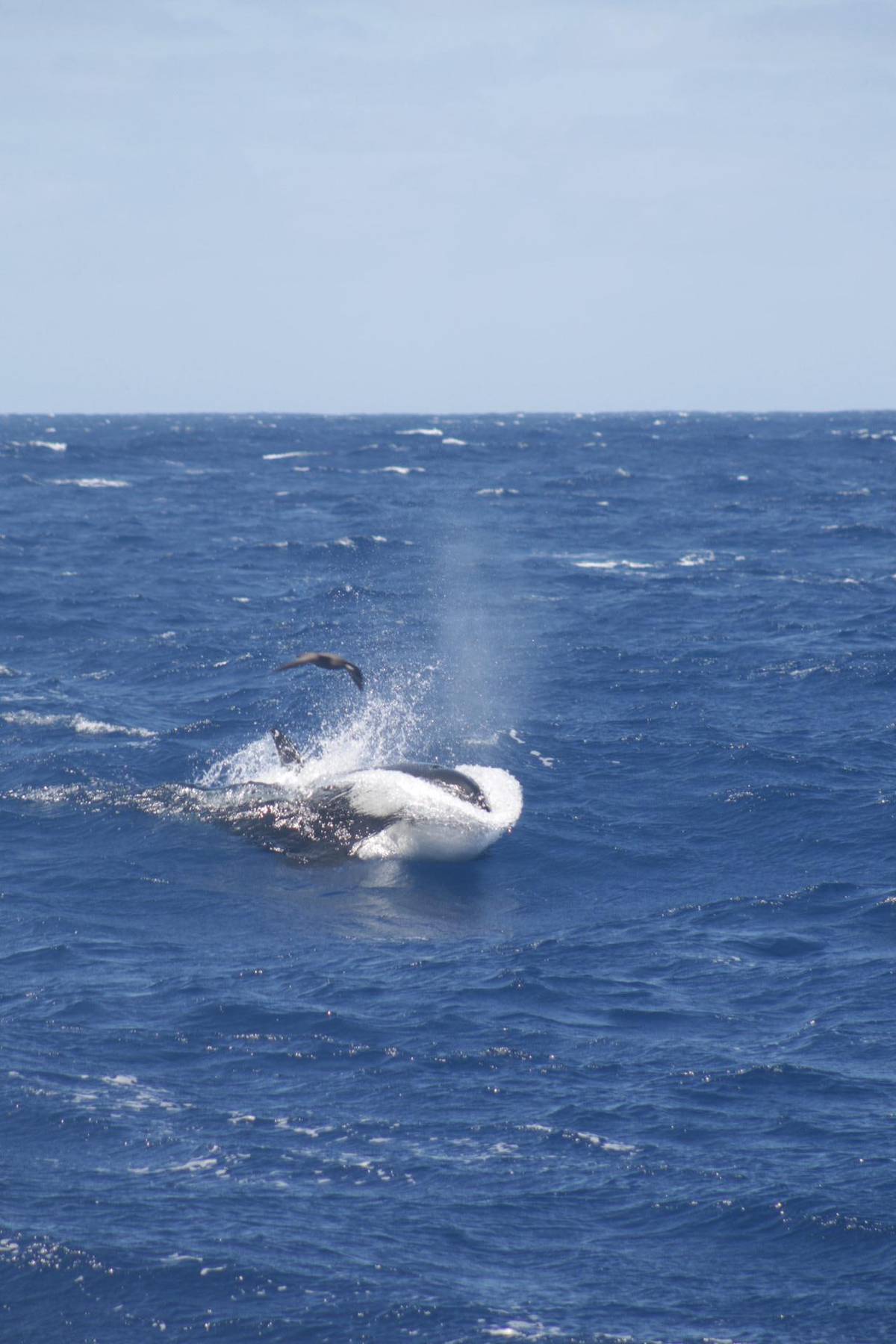
Bring binoculars for the birds. At one of the predation events the scientists watched, the seabirds included Indian yellow-nosed albatross, flesh-footed shearwater, wandering albatross and white-faced storm-petrel.2 Parks Australia says the park's upwelling water feeds marine mammals and seabirds alike.37
The birds are also your best spotters. A flock wheeling and diving over one patch of sea often marks a feeding event below, and skippers watch for exactly that. When you see birds gather, keep your eyes on the water underneath them.
Albatrosses glide for long stretches without a wingbeat, low over the swell. Even on a slow morning between whale encounters, watching them ride the wind is a small joy of its own, this far from land.
A long day suits a curious mind. The expedition lasts 8 hours and includes full interpretation from an onboard marine biologist, so ask questions whenever the boat is between sightings. Learning to read a blow, a fin or a bird flock makes every later encounter richer.
Respect the distance rules even when you are not the one at the wheel. In Western Australia boats must approach whales only from the side and no closer than 100 m.38 If a whale comes to the boat, the vessel stays put with the motor in neutral or moves slowly away at less than 6 knots.39
Finally, keep your expectations open. Australian waters hold 45 species of whale and dolphin, but few of them are often seen by watchers.40 A day that brings orcas plus one or two other species is a very good day by any measure.
Pick your date
A marine biologist, meals and the day's photos included; cancel free up to a day before.
Sperm and pilot whales, among others. Surveys from 2015 to 2017 met 69 sperm whale and 29 long-finned pilot whale groups.1
Yes. The sub-basin is described as attracting fish, sharks and deep-diving whales.3
Routinely to 2,000 feet. Their dives can last 45 minutes.8
Rarely. Orcas killed an adult blue whale off this coast in late March 2019.35
Albatrosses and shearwaters. Indian yellow-nosed and wandering albatross were recorded at one hunt.2
Yes. It names orcas, sperm whales, pilot whales, dolphins, sharks and pelagic birds.
No closer than 100 m. In Western Australia boats approach whales only from the side.38
Sources