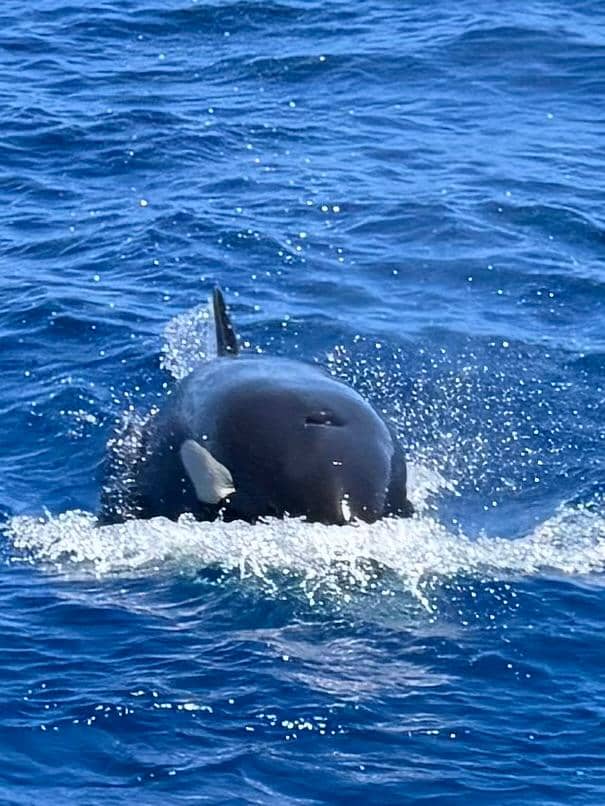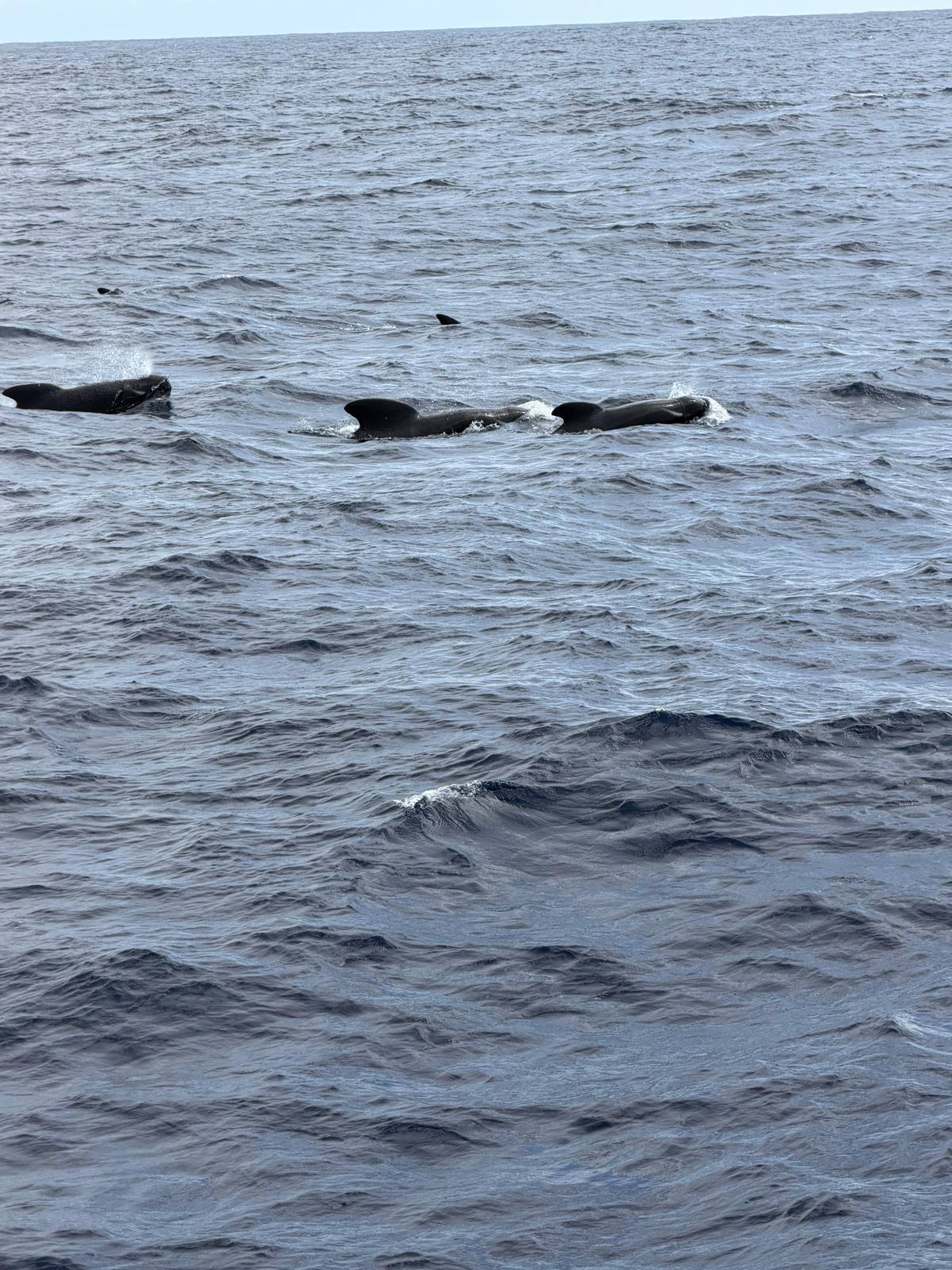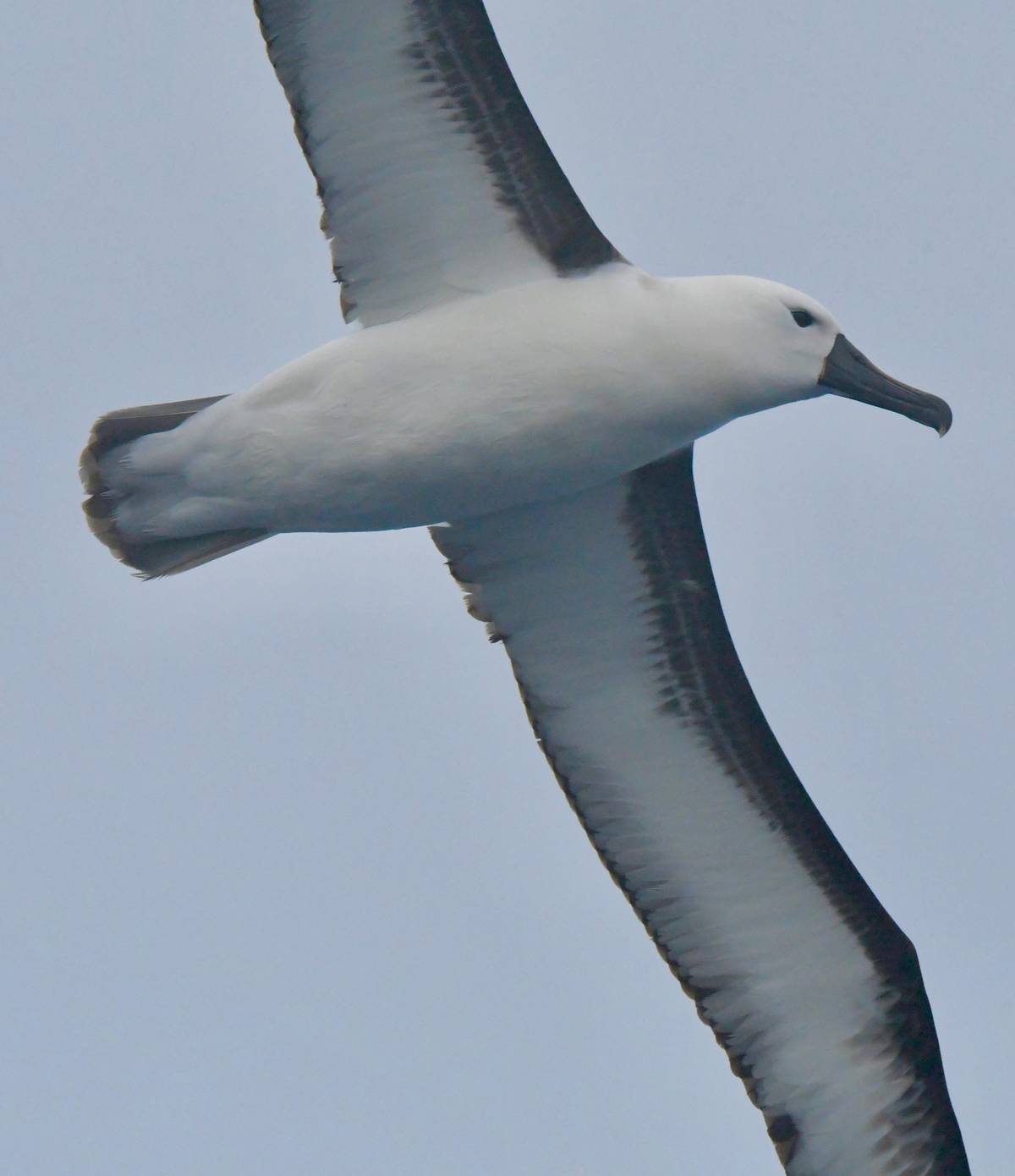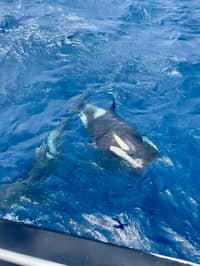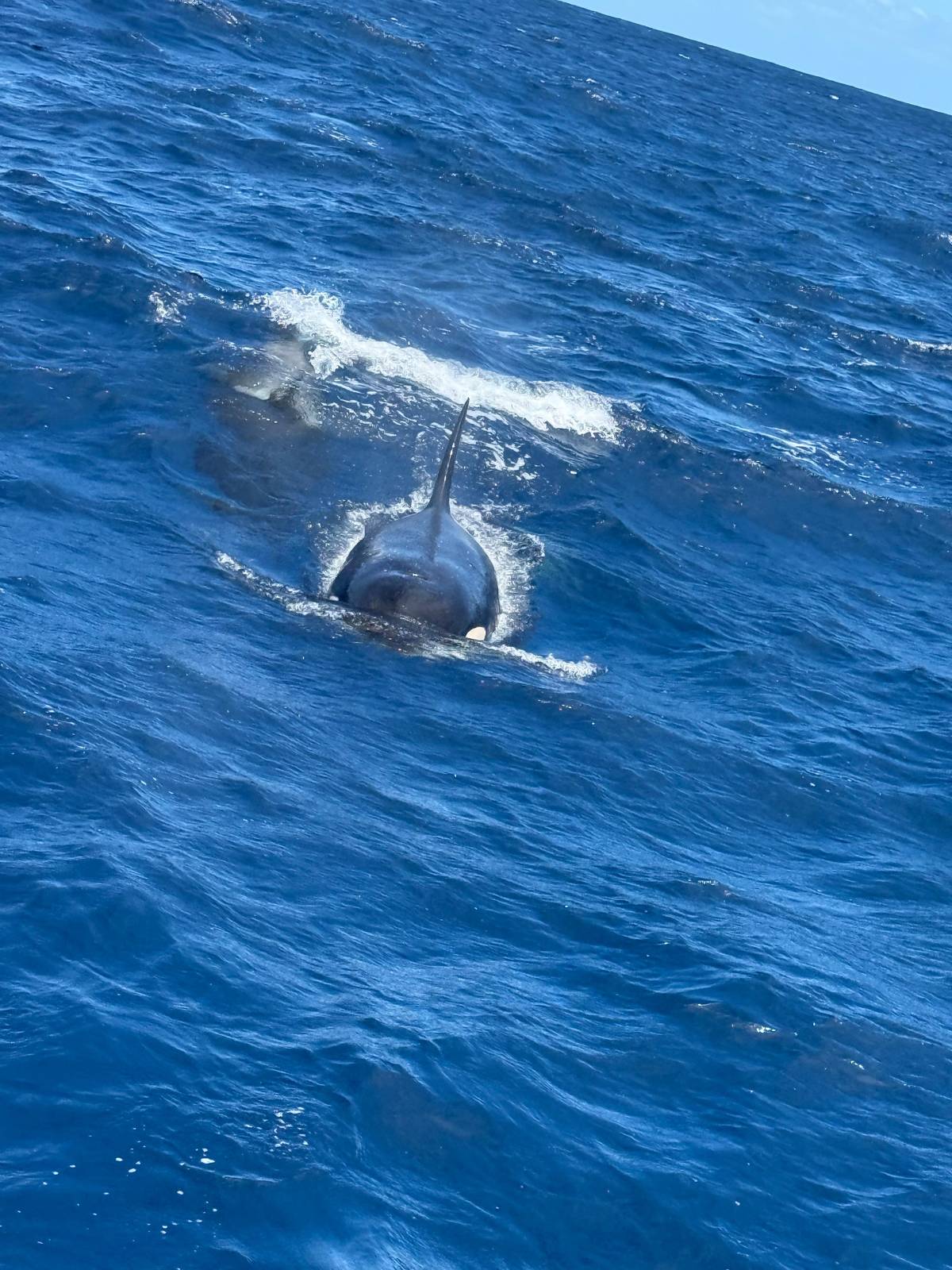
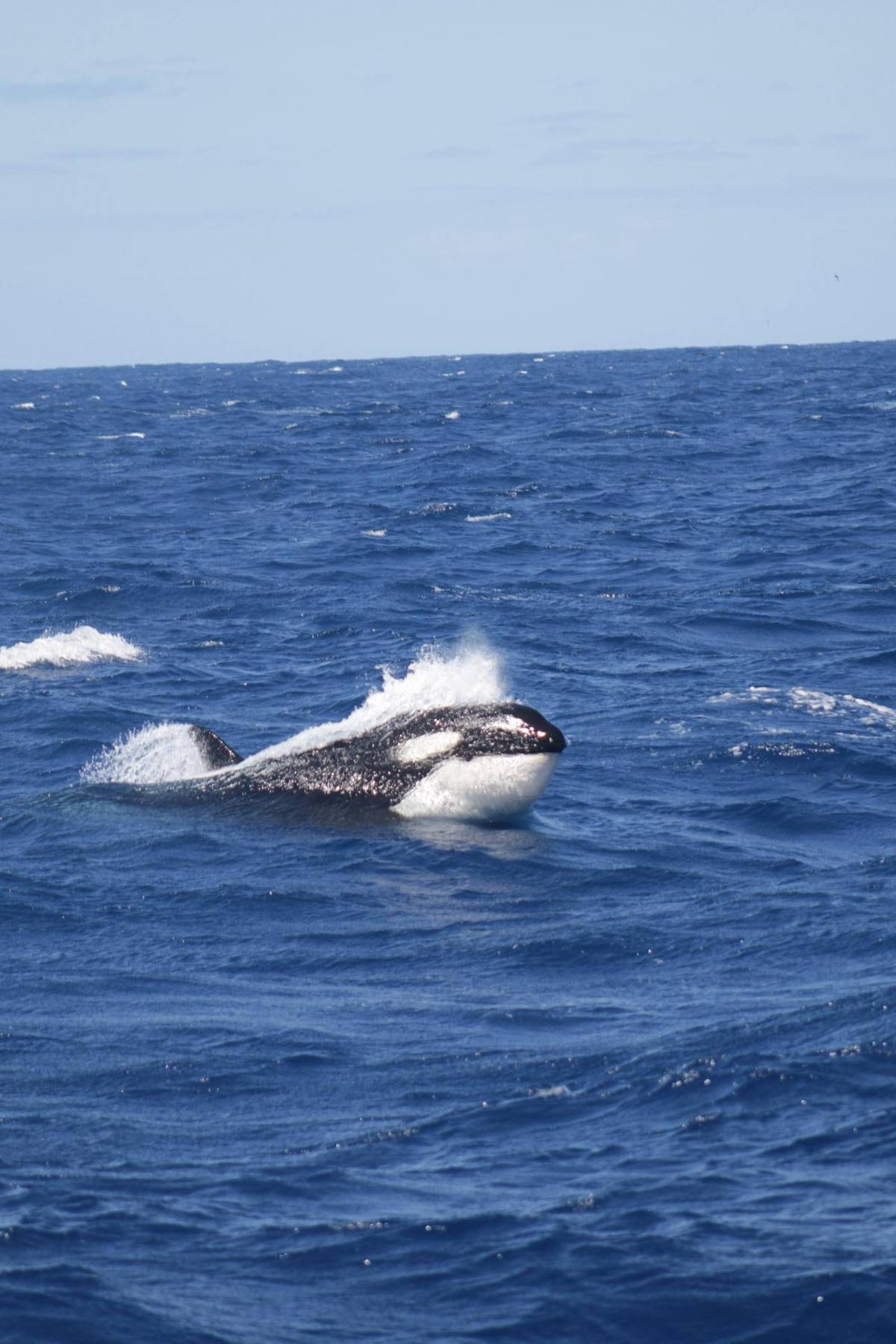
 Seen off Bremer Bay
Beaked whales
Deep-water specialists
- Records
- 2014 to 2016
- Identified
- Strap-toothed whale
- Orcas present
- At least 19
Guides
Language
EnglishCurrency
US dollar · $GetYourGuide converts to the currency you select here.
Guide · Orcas and whales
Killer whales are the ocean's top predator, and the orcas of the Bremer Canyon have been filmed and studied killing other whales. Here is what they hunt, how, and where humpbacks fit in.
Editorial team, bremer-bay-orcas.comUpdated October 24, 2026Read time: 6 min36 sources
Quick answer
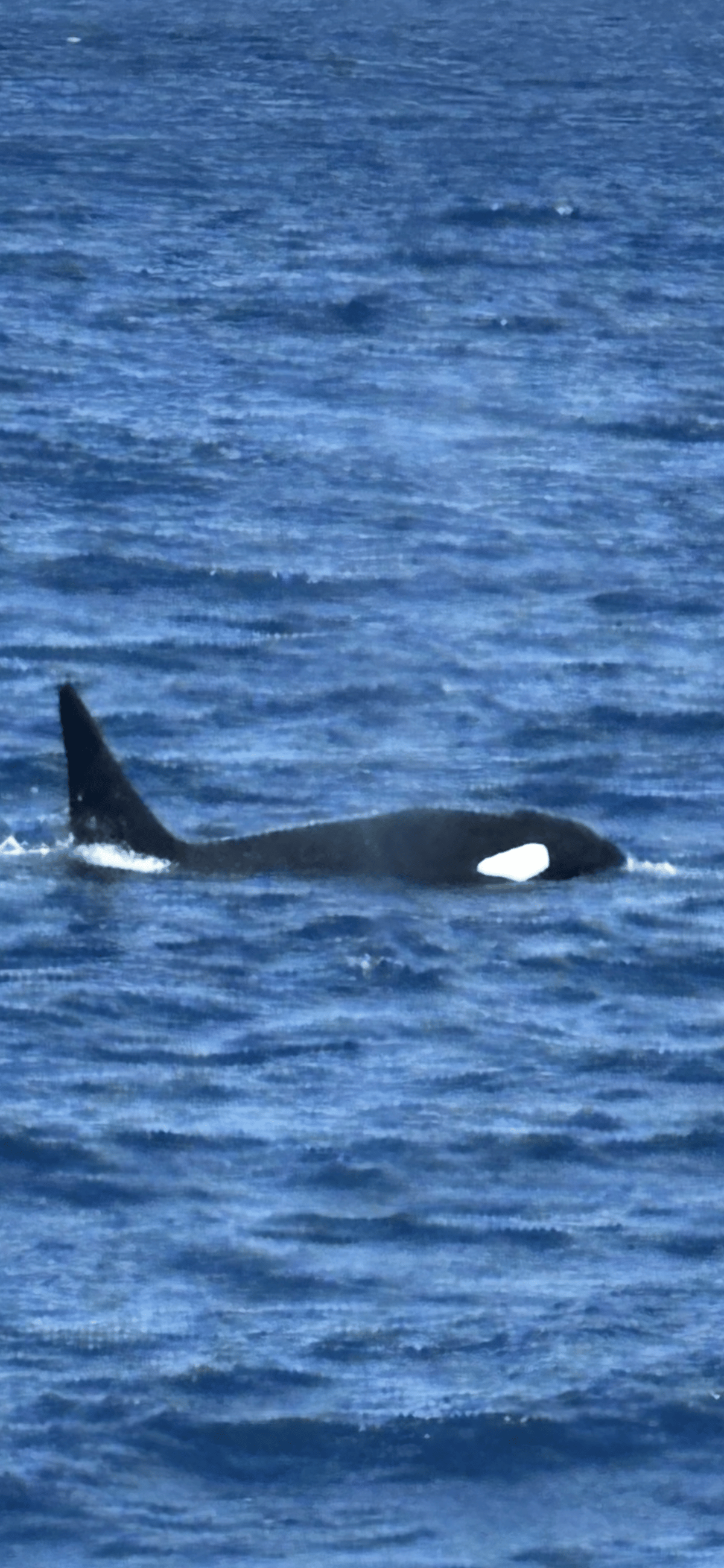
The short answer to the question is yes. The US National Marine Fisheries Service calls the killer whale the ocean's top predator and the largest member of the dolphin family.1 Some killer whales eat squid and marine mammals such as seals, sea lions, porpoises, dolphins and other whale species.5 The Australian Museum describes them as cooperative hunters that often work in packs and take whales, seals, penguins, fish, sea otters and turtles.6
Off Bremer Bay that is not theory. A study in PLOS ONE reported the first published field observations of killer whales actively preying on beaked whales, made in the Bremer Sub-Basin on four separate occasions in 2014, 2015 and 2016.2 The observations came from ordinary whale-watching boats, the same kind of trip you can book today.
Australia's own species profile is careful: the specific diet of Australian killer whales is not known, but there are reports of attacks on dolphins, young humpback whales, blue whales, sperm whales, dugongs and Australian sea lions.7 In other words, almost anything in the sea is on the menu for some killer whales, some of the time.
On record
25 February 2014
A beaked whale hunt about 36 km offshore.8
8 February 2015
Adult females, sub-adults and juveniles.9
18 February 2016
Late March 2019
The first known kill of an adult blue whale.3
2021
A further calf predation was recorded.12
The beaked whale attacks are the best documented hunts in the canyon. On 18 February 2016, scientists watched a group of seven killer whales, including adult females, one adult male, sub-adults and a calf.10 The group travelled at about 18 knots before reaching a beaked whale.13
The prey that day was positively identified as a strap-toothed whale, and three killer whales attacked it at the same time.11 By the end of the event the number of killer whales in the area had grown to at least 19.14 In 2014 and 2015 the prey was most likely Gray's beaked whale or strap-toothed whale.15
These hunts are fast, coordinated and hard to follow from a boat. The orcas work as a team, and the sea around them can fill with birds looking for scraps. If you are lucky enough to see one, it will be the moment the whole day turns on. If not, the orcas travelling and resting together are still a remarkable sight.
Side by side
On the menu
Seen off Bremer BayDeep-water specialists
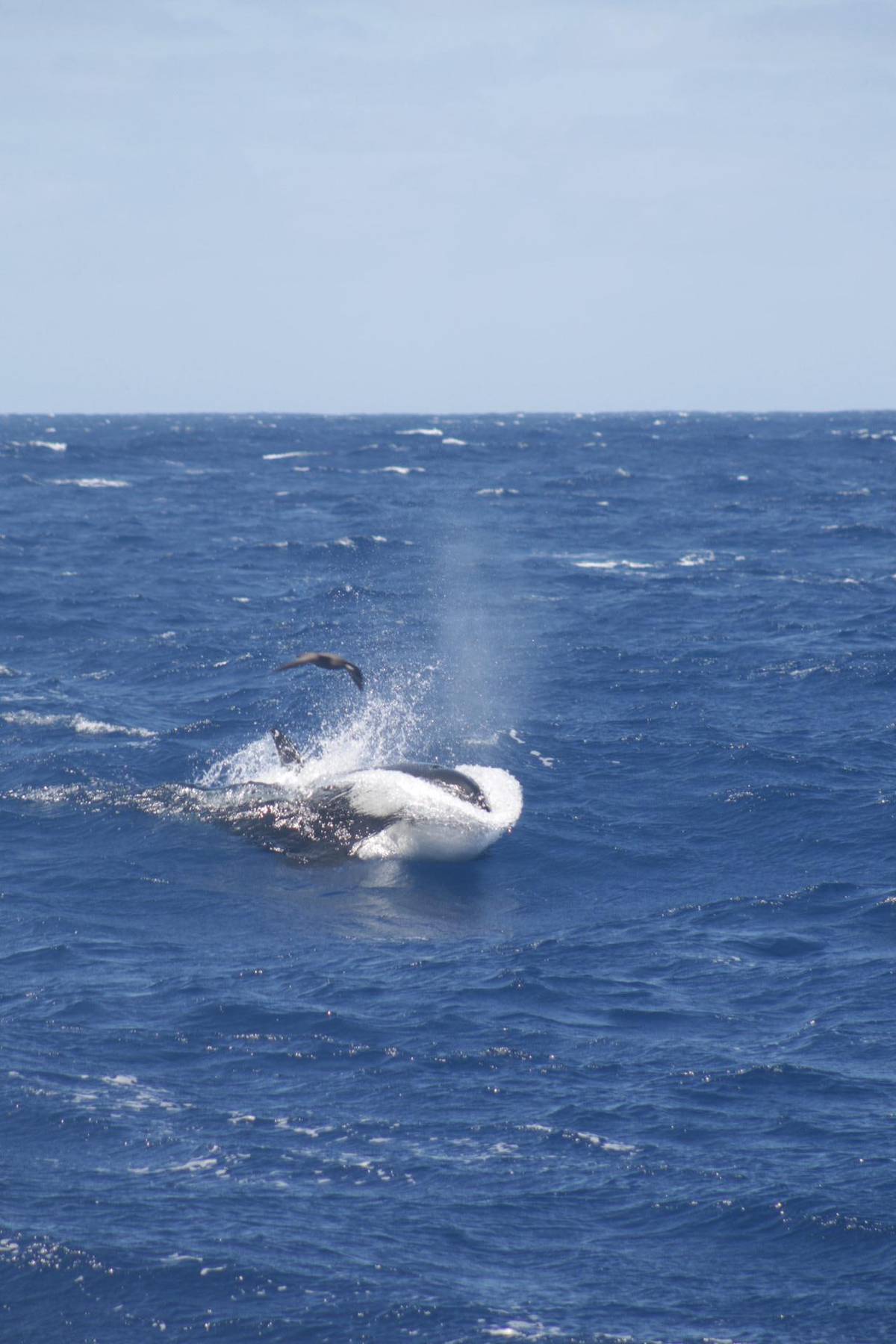 First kill 2019
The largest animal
 Calves only
On migration
Decision helper
Think about what you hope to see
Hunts are rare events; groups are usually seen travelling.2
The expedition includes full interpretation on board.
Photos and a daily blog are e-mailed after the trip.
The killer whale, also known as orca, is the ocean’s top predator. It is the largest member of the Delphinidae family, or dolphins.
The blue whale is the largest animal ever to live on the planet.21 For a long time it was not clear whether killer whales could kill a healthy adult. That changed off south-western Australia. In late March 2019, research surveys recorded the first known case of killer whales hunting and killing an adult blue whale.3
The lead researcher reported about 14 killer whales attacking the blue whale in 70 m of water when the team arrived, with the females leading the attack.22 After the carcass sank, about 50 killer whales were in the area feeding on and sharing the flesh.23
It did not stay a one-off. Two weeks later many of the same killer whales took a blue whale calf, and another calf was taken in 2021.12 At least 16 of the same killer whales took part in all three attacks.24 The researchers describe them as the first confirmed killer whale kills of blue whales, although attacks and harassment had been documented before.25
Video
Nothing loads from YouTube until you press play.
Orcas vs humpback whales is a contest with a twist. Researchers reviewed 115 recorded interactions between the two species.16 When mammal-eating killer whales approached humpback whales, in 27 cases, they attacked 85% of the time and targeted only calves.4 Off Western Australia, earlier research had already seen killer whales preying on newborn humpback calves.26
The surprise is what happens next. When humpbacks approached killer whales that were attacking, they often harassed them, in 55% of 56 interactions, regardless of the prey species, which the authors argue is mobbing.16 Of the prey in those interactions, only 11% were humpbacks and 89% were other species, from seals to other whales.17
That mobbing sometimes let the killer whales' prey escape, including animals that were not humpbacks.27 Why humpbacks do it is still debated. For a visitor, the lesson is that the ocean is not a simple ladder of predator and prey: a full-grown humpback is a match even for a pod of orcas.
A killer whale is big, but it is far from the biggest whale it meets. The US National Marine Fisheries Service gives killer whales a size of up to 11 tons and 32 feet.18 Humpbacks reach about 40 tons and about 60 feet.19 Blue whales reach up to 330,000 pounds and 110 feet.20
That gap explains how orcas hunt. They work in groups, use speed and coordination, and often pick the young. A humpback calf is about 13 to 16 feet long at birth, a size a pod can handle.28 Southern right whale calves, and possibly adults, may be vulnerable to killer whale predation too, particularly on migration and at high latitudes.29
Sperm whales defend themselves as a group. Australia's species profile records a confirmed report from South Australia of about 13 killer whales attacking a pod of sperm whales that had formed a protective daisy formation.30 Every large whale has its own answer to the threat, and the orcas adapt to each one.
A common search is orcas vs killer whales, as if they were different animals. They are not. The US National Marine Fisheries Service describes the killer whale as also known as orca.1 The Australian Museum lists orca as the alternative name and gives the species a size of 9 m and 5 tonnes.31
What does differ is the type of killer whale. Scientists have found many populations with several distinct ecotypes worldwide, some of which may be separate species or subspecies.32 Some specialise in fish, others in marine mammals, and they rarely mix. The Bremer orcas hunt whales, so they belong to the mammal-eating kind.
Killer whales live in every ocean and are the most widely distributed of all cetaceans.33 Despite the name, they are dolphins, not whales in the narrow sense, and in Australia they are protected as a listed migratory species.3435
Nobody can promise it. Predation events are the dramatic peak of the orca season, but most of the day is spent watching pods travel, rest and socialise. The booked expedition names orcas, sperm whales, pilot whales, dolphins, sharks and pelagic birds among the wildlife you might meet, and makes no promise of a hunt.
What it does give you is time and expertise. The trip lasts 8 hours, with full interpretation from an onboard marine biologist who can explain what the pod is doing. The listing says photos and a daily blog from the expedition are e-mailed to you afterwards, so you can watch without worrying about every shot.
Whatever you see, the rules keep the boat at a respectful distance. In Western Australia boats must approach whales only from the side and no closer than 100 m.36 A hunt is wild and unpredictable, and watching it from a distance is the only right way.
Pick your date
A marine biologist, meals and the day's photos included; cancel free up to a day before.
Yes. Off Bremer Bay they have been seen killing beaked whales and blue whales.23
Yes, as was recorded in 2019. About 14 killer whales attacked an adult blue whale in late March 2019.322
Calves, mostly. Mammal-eating orcas that approached humpbacks attacked only calves.4
In a way, yes. Humpbacks do harass attacking orcas, which researchers call mobbing.16
Yes. The killer whale is also known as orca.1
Up to 32 feet. And up to 11 tons, by the US National Marine Fisheries Service's figures.18
Yes. The killer whale is a listed migratory cetacean under the national environment law.35
Sources